
Sarah Kaye & Co Research
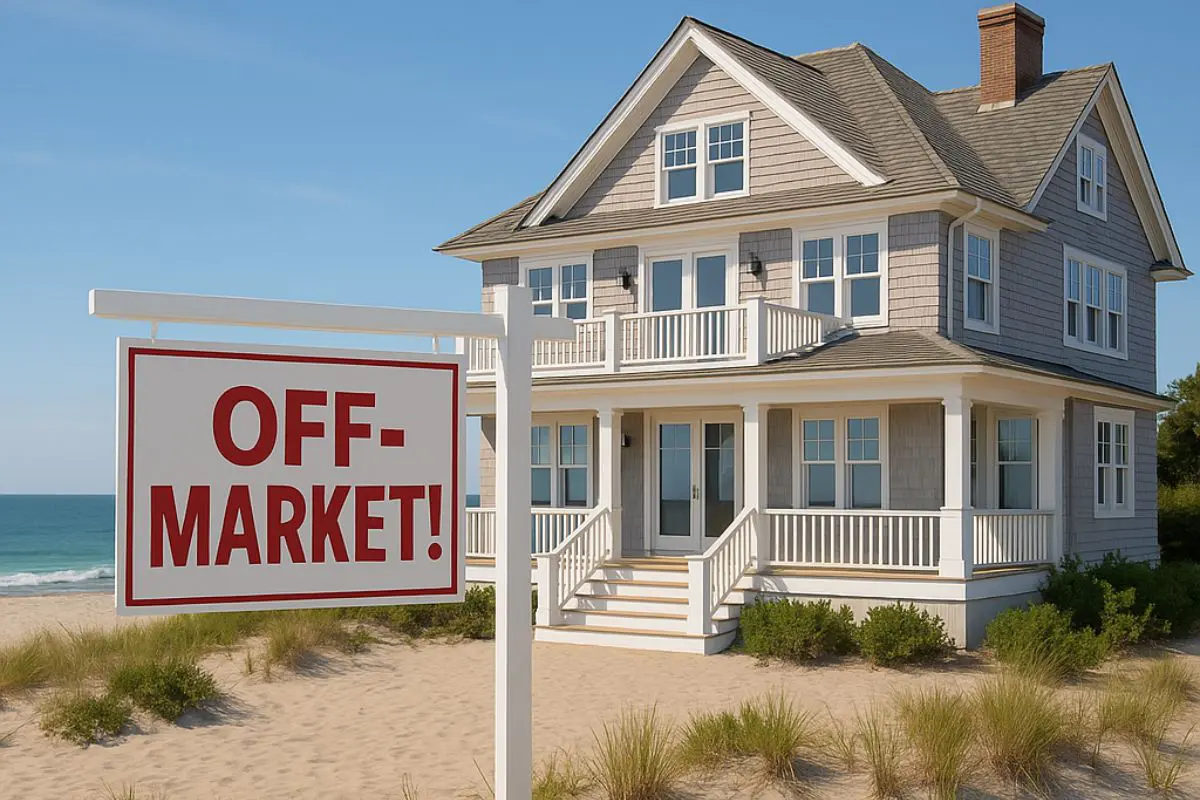
Off-market has no formal definition, and the word covers three quite different things. Here is how to tell which kind you are being offered, and what each one takes.
If you got an off-market listing by email this week, so did a few thousand other people.
That is no criticism of the agent who sent it. It is what the word has come to cover. “Off-market” has no formal definition in NSW. It is used for at least three quite different things, and each has a legitimate reason to exist.
It is also the first thing most buyers ask us: “Can you get me off-market properties?” Almost any buyers agent can say yes, including one who started six months ago, because the easiest kind takes a few phone calls. The better question is: which kind?
We understand why people ask. After months of Saturday inspections and a lost auction or two, off-market sounds like a way out of the crowd. Sometimes it is. More often it is the same crowd, reached by email.
We are not the only ones saying so. The national buyers agents association has made the same point, that buyers should know whether a home is truly off-market or simply pre-market and going out to a database.
So here is what off-market means in practice, as we see it from the buying side across the Northern Beaches and the North Shore.
Off-market is not secret, not cheaper and not yours alone
It is not secret. Many homes called off-market sit on the agent’s own website, where anyone can find them. They have been emailed to the agent’s whole database. The only places they are missing from are realestate.com.au and Domain.
It is not automatically cheaper. A quiet sale can suit an owner who wants to test a high price without the risk of a public campaign falling flat. With no other bidders in view, you have less to measure your offer against. You might pay more, not less.
It is not yours alone. The email may read as though you are one of five. You may be one of thousands. Even at the quietest end, you may not be the only buyer who has been told.
What it means for you. Treat “off-market” as a description of how a home is being sold. It tells you nothing about whether it is a good home or a fair price.
There are three kinds, and each takes more effort than the last
We use three plain names. Each one is something a buyer does.
Preview. The home is heading to the portals. It just isn’t there yet. Often that is simple timing: photos, copy and preparation take time after the owner signs. Sometimes a few buyers are offered an early look. The plan was always a public campaign. Effort needed: very little. Wait a few days and it will appear.
Subscribe. The home goes to the agent’s database and often onto the agent’s website, but not to the two big portals. You hear about it because you are on a list, along with everyone else on that list. Effort needed: some. Leave your details with the agents who matter in your suburbs, and read what arrives each week. It is worth doing. Just don’t mistake it for an inside track.
Approach. The owner is not actively selling, but would sell to the right buyer. Nothing is advertised. Nothing lands in your inbox. It happens when someone approaches the owner, through an agent who knows them, with a buyer who has funds ready and a brief that fits. Effort needed: real and sustained. It rests on relationships with the senior agents in each area, built over years.
Preview comes to you. Subscribe comes to everyone. Approach only happens if someone goes out and does it.
What it means for you. When you are offered an off-market property, work out which kind it is. Is it on the agent’s website? Did it come by group email or by a phone call? Are the professional photos already done? Three quick answers will tell you.
A quiet sale suits some homes and some owners, not all
An Approach sale usually needs one of two things.
The first is a home that is hard to compare. The less a home resembles its neighbours, the more sense discretion makes, because the right buyer is one of a few. For a home that is one of many similar ones, selling quietly probably costs the owner, most of all when buyers are scarce.
The second is an owner who values an easy sale over the last dollar. Some people will accept a fair price in return for privacy, speed and no open homes. That happens at every price point.
It is still a sale, and the law treats it as one. In NSW an agent needs a signed agency agreement before marketing a home, and a contract for sale must be prepared before the home is offered. That holds for one private inspection as much as for a full campaign. So an Approach home is for sale. It is simply not advertised.
The quieter the sale, the less price information you get. Often there is no published guide at all. New NSW rules that would require a price on advertised homes have been postponed to December 2027. As we read them, a home that is not advertised would not need one even then.
If you do get an Approach inspection, treat it with care. The owner has let you in as a favour to an agent they trust. Turn up with your finance settled and your questions ready. Give a clear answer quickly, yes or no. An owner who is not selling has no reason to wait while you think it over, and the agent will remember how you handled it.
What it means for you. An off-market property is where your own evidence matters most. With no guide and no crowd, the only check on price is recent comparable sales. Do that work before you offer, or have someone do it for you.
Our own 75% covers all three kinds
We say that over 75% of the homes we buy for clients are off-market. You should know how we count that. The figure includes all three kinds: Preview, Subscribe and Approach.
We think that is a fair use of the word as the industry uses it. We also think you are entitled to ask the next question. So ask us how many were Approach purchases. We will tell you.
Ask any buyers agent the same three things, us included:
- Which kind of off-market do you mean?
- How do you hear about those homes before I would?
- How do you check the price when there is no guide and no competition?
Off-market access matters. For some buyers and some homes it is the only way in. But it is a way of finding a home, not a reason to buy one. The home still has to be right, and the price still has to stand up.
If you would like to talk through which kind suits your search, Book a Zoom Call with Sarah or Mike.
About the author
Mike Kaye is Co-Founder and Director of Sarah Kaye & Co., a director-led independent buyers’ agency for Sydney’s Northern Beaches, Upper North Shore, and Lower North Shore. A former Accenture Global Partner and Graduate of the Australian Institute of Company Directors (GAICD), with formal qualifications in property law, valuation, and economics, Mike advises clients on disciplined property acquisition, risk management, and long-term capital protection. He writes a monthly property column for the Sydney Observer; this note carries the data behind the November 2026 column, “The front-page suburb”.
Sources: NSW Government, agency agreements for the sale of property; NSW Government, sales contracts: requirements for property agents; NSW Fair Trading, changes to property and stock agents laws; Broker Daily, reporting the Real Estate Buyers Agents Association of Australia. This article is a plain-English view for buyers and is not legal advice.