
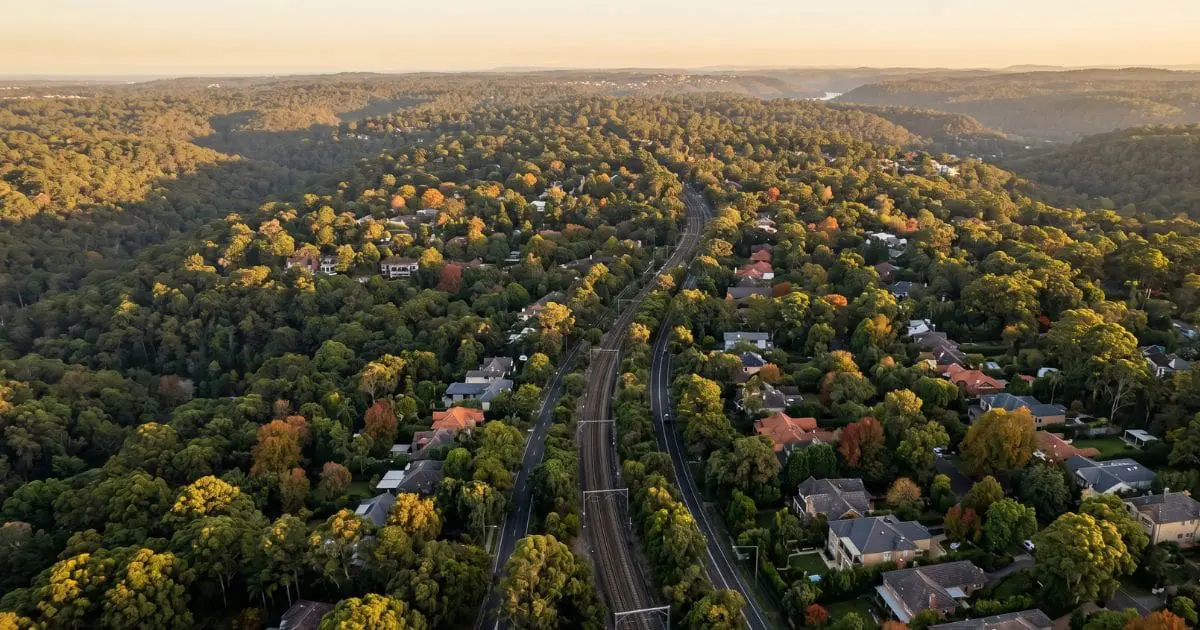
The Upper North Shore house market is doing better than the Budget headlines suggest — and Wahroonga is the centre
A buyer’s-agent read of the most recent registered-sales data — and why the post-Budget commentary needs a sharper local lens.
A Sarah Kaye & Co Research note on the May 2026 Budget and what registered-sales data is — and isn’t — showing across the Upper North Shore, with Wahroonga the suburb buyers most consistently ask about by name.
Most coverage of the May Budget’s property tax changes has framed them as the dominant force on the Sydney property market this winter. As a buyers’ agency operating across the Upper North Shore — Wahroonga, Pymble, Turramurra, St Ives, Killara, Gordon, Roseville — our own analysis of the most recent registered-sales data tells a more nuanced story. The Upper North Shore house market has held its level at the aggregate level. The unit market is a different story. And Wahroonga, as ever, sits at the centre of buyer interest — the suburb we are profiling in this piece for that reason.
What the tax changes were supposed to achieve
The five reforms
The Treasurer’s own modelling framed the goal in surprisingly modest terms. Five property tax reforms — negative gearing abolished for new investors in established property, the 50 per cent capital gains tax discount replaced with inflation indexation, a 30 per cent minimum capital gains rate, pre-1985 assets brought into the tax net, and a 30 per cent minimum on discretionary trust distributions — together are projected to deliver 75,000 additional first-home buyers over a decade, lift the home ownership rate from roughly 66 to 67 per cent, and put $4.81 a week in additional take-home pay into a typical working household’s pocket from July 2028 onward.
What Treasury’s own modelling says
Read in context, those are meaningful structural policy moves but modest lived outcomes. A one-percentage-point lift in home ownership over ten years. Less than five dollars a week in additional pay, two years from now. Treasury says the package will shave roughly two percentage points off house price growth over two to three years — a number the bank analyst desks have variously revised to three or four per cent. None of these figures, in isolation, would normally produce a market response on the scale that some of the post-Budget commentary has implied.
What our own data has actually shown so far
It is too early to fully separate the impact of the tax changes from everything else that is happening in the property market. Much of the Budget package had been telegraphed in the months before May, which means a meaningful share was likely already factored into buyer and vendor decisions through late 2025. The macroeconomic backdrop — the cash rate at 4.35 per cent, headline inflation at 4.6 per cent, the Iran war keeping oil prices around US$100 a barrel, and construction costs running 10 to 25 per cent above counterfactual — has been pulling its weight too. Pretending we can cleanly attribute the recent softening to the tax changes alone overstates what any single signal can tell us.
How we read the registered-sales data
We run our own analysis on the NSW Valuer General’s settled-sales data — every legally registered property transfer in our coverage area, drawn directly from Land Registry Services. We compared two four-week windows of contract activity across the Upper North Shore: the four weeks before Christmas 2025 (28 November to 25 December 2025) against the most recent four weeks where we still have a statistically meaningful sample (13 March to 9 April 2026).
Houses holding, units the divergence
Across that comparison, Upper North Shore houses came in roughly flat at the aggregate level — a median change of minus 0.3 per cent. Underneath the flat headline, there is genuine divergence between suburbs. St Ives, Wahroonga, Pymble and Turramurra all softened. Roseville, Killara and Gordon firmed. The cluster as a whole has held its level.
Units have been a different story. The aggregate Upper North Shore unit median fell by close to 20 per cent between the two periods. Some of that movement is genuine softening at the higher end of the unit market. Some of it is a compositional effect — Hornsby’s unit volume nearly doubled over the same period at roughly stable prices, which is the signature of first-home buyers and downsizers absorbing the more affordable stock at the bottom of the market. Either way, the divergence between a flat house market and a softening aggregate unit market is the most interesting movement in our recent data.
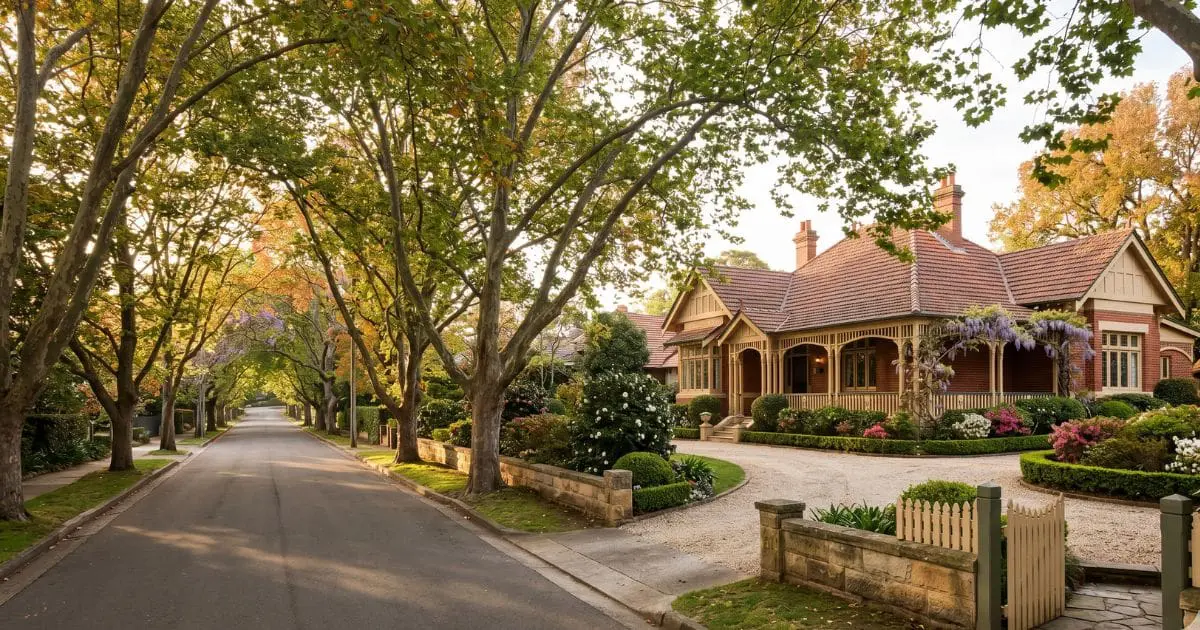
Wahroonga is the centre of the story
Wahroonga is the address nearly every prospective Upper North Shore buyer asks about by name. The village precinct, the railway station, the elite-school catchment that takes in Knox Grammar, Abbotsleigh, Wahroonga Preparatory and Ku-ring-gai High, and the historic family-home stock between Coonanbarra Road and Burns Road combine into something few other Sydney suburbs offer in one place. When clients walk into our office looking at the Upper North Shore for the first time, Wahroonga is almost always the first suburb on the list.
On the four-week data
On the four-week registered-sales comparison, Wahroonga sits in the softened cohort with St Ives, Pymble and Turramurra. We are deliberately not putting a single-suburb percentage on that movement. Four-week sample sizes at the suburb level are too narrow to support a precise number we would defend. Directionally, the signal is mild softening across the upper end of the Upper North Shore house market, broadly in line with the modest minus 0.3 per cent aggregate move. There is no Wahroonga-specific collapse hiding in the data. The suburb is doing what the broader Upper North Shore house market is doing — holding its level with a small downward tilt that is not material at the price points our clients are actually transacting at.
The signal that matters: depth of buyer interest
The more relevant signal for Wahroonga is the depth of buyer interest, which has not softened in the way some of the post-Budget commentary would imply. Our own pipeline reflects this directly. Wahroonga inspections in the family-home segment — the $3 million to $5 million bracket, where the suburb competes with Killara, Gordon and Roseville on stock and on schools — are still well-attended. The structural tailwinds for the suburb have not gone anywhere through the Budget window. If anything, the schools-and-station combination is intensifying as the post-pandemic relocation cohort completes its second decision-making cycle and lands on the kind of leafy, well-serviced suburb that Wahroonga has been positioning itself as for the better part of a century.
What it means for family-home buyers
For buyers actively looking at Wahroonga family homes, the practical implication is that the suburb is unlikely to offer a meaningful price-reset opportunity over the next two quarters. The macro setting will do more of the work on the actual purchase budget than any post-Budget weakness on the family-home end of the market. Where there is more room to negotiate — modestly — is in the older unit stock across Wahroonga, Pymble, St Ives and Turramurra, where the aggregate unit median has softened over the comparison window. That softening reflects compositional change in the unit cohort more than a uniform price reset across the upper end. Family-home buyers in Wahroonga should plan around the macro setting rather than around an expected price fall.
What we are setting aside
The auction clearance headline
One widely-quoted signal we are explicitly setting aside is the headline that Sydney’s preliminary auction clearance rate fell six percentage points in the week after the Budget. On both statistical and methodological grounds, we would not anchor any conclusion on that figure. The clearance rate is a fraction whose denominator depends on which auctions are reported as sold, withdrawn or passed in, and the reporting timing of those outcomes can shift the number meaningfully week-on-week without anything actually changing in the market. A six-point move on one weekend is not statistically significant. (We covered the structural reasons in detail in our piece on Sydney’s Northern Beaches auction clearance rate.)
What we see in our day-to-day practice
We would add a more direct observation from our own day-to-day practice. Having lived in these suburbs for the better part of twenty years and operated a buyers’ agency for the last seven years, we know what an active Saturday auction circuit looks like. This is not it. The softening of the auction market has been happening for several months, not since Budget night. The Budget may have accelerated it. It did not cause it. Despite having secured numerous properties for clients over the past few months, we genuinely cannot remember the last time we attended a Saturday auction ourselves. Increasingly, properties that selling agents place on auction campaigns are being settled before auction day — sold prior, withdrawn, or quietly rolled into a private treaty conversation. The lower public auction volumes are partly a consequence of that shift in agent behaviour, not only of buyer reticence.
At inspections
At inspections we are seeing fewer people through. In a meaningful number of cases this month we have been the only party inspecting a property at all. And yet our own pipeline has not been busier in the seven years we have been running this practice. There are still serious buyers in the Upper North Shore market. They are simply being more rigorous in their approach, doing more due diligence before committing, and — increasingly — working through buyers’ agents rather than turning up cold to a Saturday morning auction. The composition of who is in the market has shifted. The depth of activity has not.
What this means going forward, by cohort
Existing homeowners and future buyers
For existing Upper North Shore homeowners, the direct tax impact on your own home is approximately zero. The principal-residence capital gains exemption was untouched. The indirect impact — slower price growth on a $3 million Wahroonga family home through to 2031 — works out to less than a single year of typical growth in our markets. The renovation can resume. The property pages can go back in the recycling.
For future buyers in our suburbs, the tax architecture is genuinely in your favour. Less investor competition at auctions, slightly slower price growth, modestly higher borrowing capacity once the income-tax bracket changes land. The catch is that the macroeconomic setting — the rate at which you can borrow, the cost of any work you might want to do to a property after settlement — matters more for your actual purchase budget than the tax architecture does. Buyers looking specifically at the older unit stock across Wahroonga, Pymble, St Ives and Turramurra may find slightly more room to negotiate over the next two quarters than they have had for some time. Family-home buyers in Wahroonga and the firming-end suburbs of Killara, Gordon and Roseville should plan around the macro rather than around an expected price fall.
Existing investors and renters
For existing investors already holding Upper North Shore property bought before the evening of 12 May, the negative gearing rules on those assets are grandfathered indefinitely. The new capital gains rules will apply when you sell, and on long-held property the inflation-indexation method with the 30 per cent minimum floor usually costs more than the old 50 per cent discount. The architecture is asking you to hold, not trade. Anyone with investment property in a discretionary trust should be modelling the post-2028 distribution math with their accountant well before the rollover window opens in mid-2027.
For renters on the Upper North Shore, the Budget’s silence is the loudest thing in it. Slower investor activity over the next two to three years will mean a smaller pipeline of new rental supply, in a market where rental stock on the Upper North Shore is structurally limited to begin with. Treasury’s published estimate is roughly two dollars a week of additional rent pressure. Our working assumption is quite a bit higher than that. The cohort that received nothing in this Budget will likely bear most of the real cost.
Why we say what we say
Most property commentary you will read across the coming months will frame the tax changes as the centre of the story. They are part of the story. On our data, they are not the largest part for the next eighteen months — and on the Upper North Shore specifically, the house market is holding and the unit story is local rather than systemic. The cash rate, oil prices, construction costs and the broader pace of household debt servicing matter more for almost every Upper North Shore property decision being made today. That is what we are telling our clients, and that is what the data — read carefully — is telling us.
Methodology and sources
Source dataset: NSW Valuer General Property Sales Information bulk feed, accessed under the NSW Open Data Policy (CC BY-NC-ND 4.0).
Comparison windows: four weeks before Christmas 2025 (28 November to 25 December 2025) vs the most recent four weeks (13 March to 9 April 2026). Coverage: the Upper North Shore.
Filtering: arms-length residential sales only; standard price-range and same-day same-price cluster filters applied.
Sample size caveat: four-week windows are narrower than the eight-week windows we use for the quarterly Sydney’s Northern Suburbs price tracker. Suburb-level movements within four weeks should be read as directional rather than precise. For that reason we have deliberately avoided putting suburb-level percentages on the most-softened individual suburbs in this piece.
Treasury figures and Budget package details: 2026–27 Federal Budget Papers and accompanying Treasurer’s modelling.
About the author
Mike Kaye is Co-Founder and Director of Sarah Kaye & Co., a boutique, director-led buyers agency working across Sydney’s Northern Suburbs — the Northern Beaches, the Lower North Shore, and the Upper North Shore. Mike leads Sarah Kaye & Co Research, the firm’s in-house analytics practice. A former Accenture Global Partner and Australian Army Officer, he studied property law, valuation, and economics at UNSW and is a Graduate of the Australian Institute of Company Directors. His commentary has been profiled in the Australian Financial Review, the Sydney Morning Herald, and AICD Magazine. As a Northern Beaches buyers agent, Mike works exclusively for buyers — fixed-fee, no kickbacks, with over 75% of clients’ homes secured off-market.