
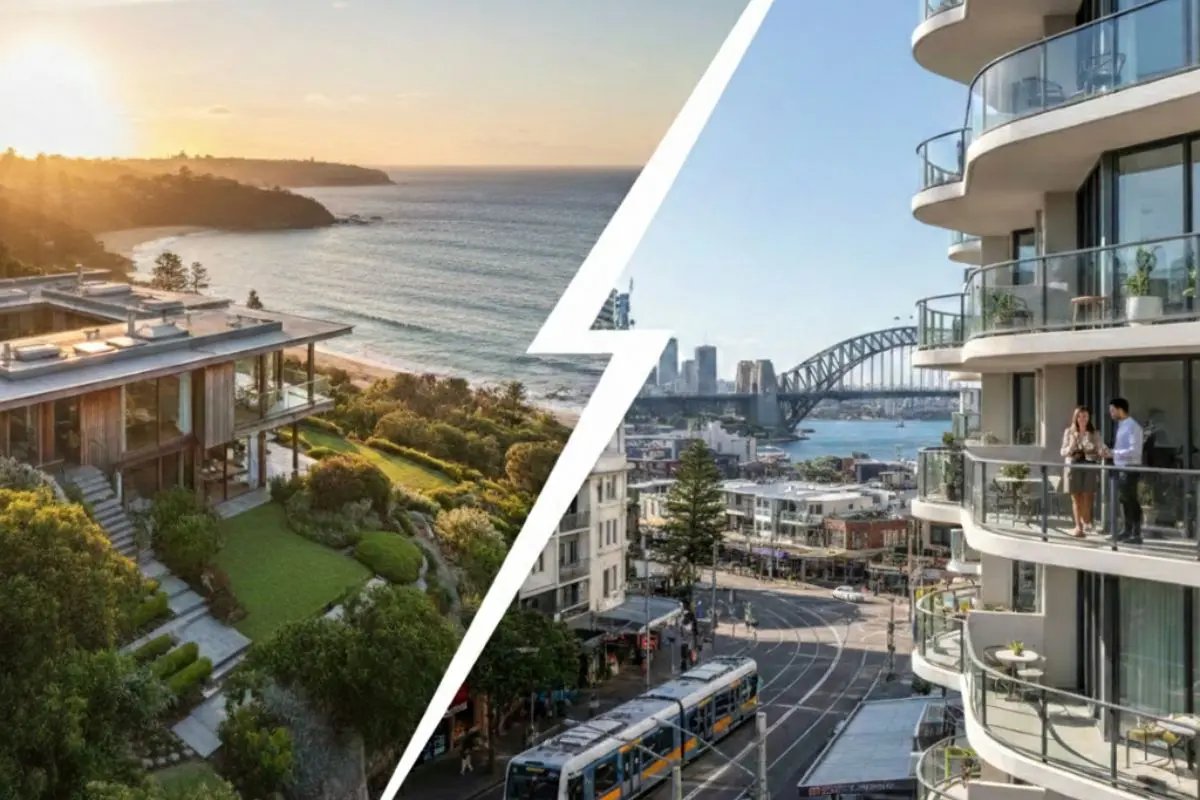
The Great Divide of 2026: House or Apartment in Sydney’s North?
If you are looking to buy in Sydney’s North this year, you’ve likely hit the same fork in the road that thousands of other buyers are facing. Do you stretch yourself to the limit for a house in an outer suburb, or do you opt for a premium apartment in a blue-chip location?
In previous years, the advice was often simple: “Land is king.” But 2026 is rewriting the rulebook.
As we navigate a year defined by an “affordability ceiling” and a chronic shortage of stock, the gap between houses and apartments is shifting. The data from the first quarter of 2026 tells a fascinating story—one where units are no longer the poor cousin, but in some suburbs, the smarter play.
Let’s break down the data to help you decide which path is right for you.
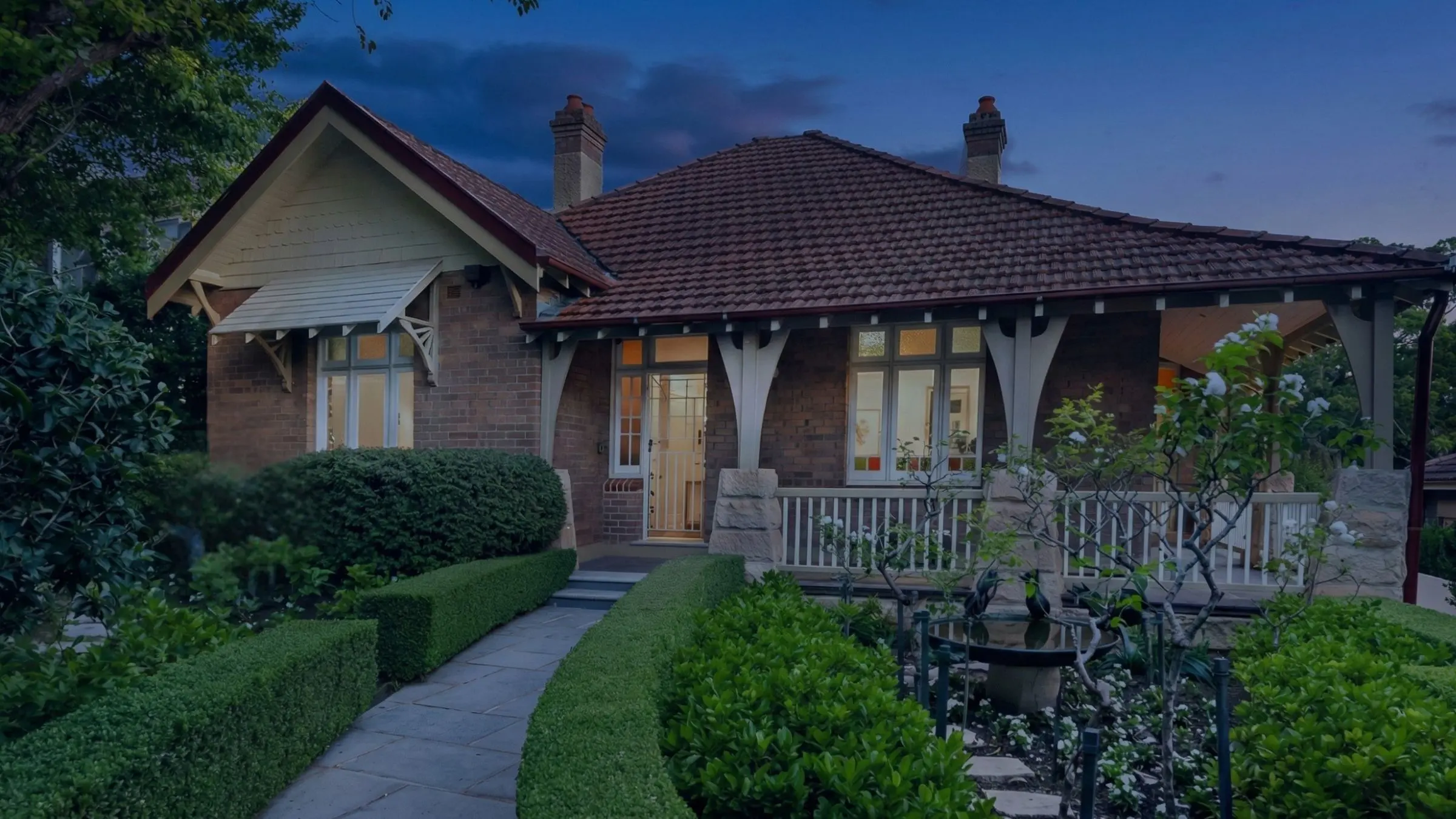
The Case for Houses: The Scarcity Premium
Despite interest rate headwinds, the house market in Sydney’s North remains the “gold standard.” However, the type of growth has changed. We are seeing a “multi-speed” market where trophy homes soar while the middle market taps the brakes.
Why buy a house in 2026?
Because they aren’t making any more land. The “trophy” market has decoupled from interest rates, meaning if you can afford to get into a suburb with scarcity value, your asset is insulated from economic shocks.
The “Unicorn” Growth Suburbs:
If you think the market has flattened, look at Manly. House prices there surged by 15.4% in late 2025 alone, hitting a median of $5.2 million. This isn’t just growth; it’s a boom fueled by cash-heavy buyers who don’t care about mortgage rates. Similarly, Palm Beach houses jumped 7.6%, proving that lifestyle locations remain bulletproof.
The “Value” Corridors:
For families who can’t stretch to over $3m, the smart money is moving to where the “ripple-effect” hasn’t fully hit. North Narrabeen with a median price of $2.4m, grew by 6.1% last quarter. It offers that quintessential Northern Beaches lifestyle for literally half the price of Manly.
The Verdict:
Buy a house if you are chasing long-term capital growth and can afford to hold through interest rate fluctuations. Look for suburbs with a “moat”—like ocean views or Tier 1 school zones (e.g., Wahroonga, Turramurra) where demand is permanent.
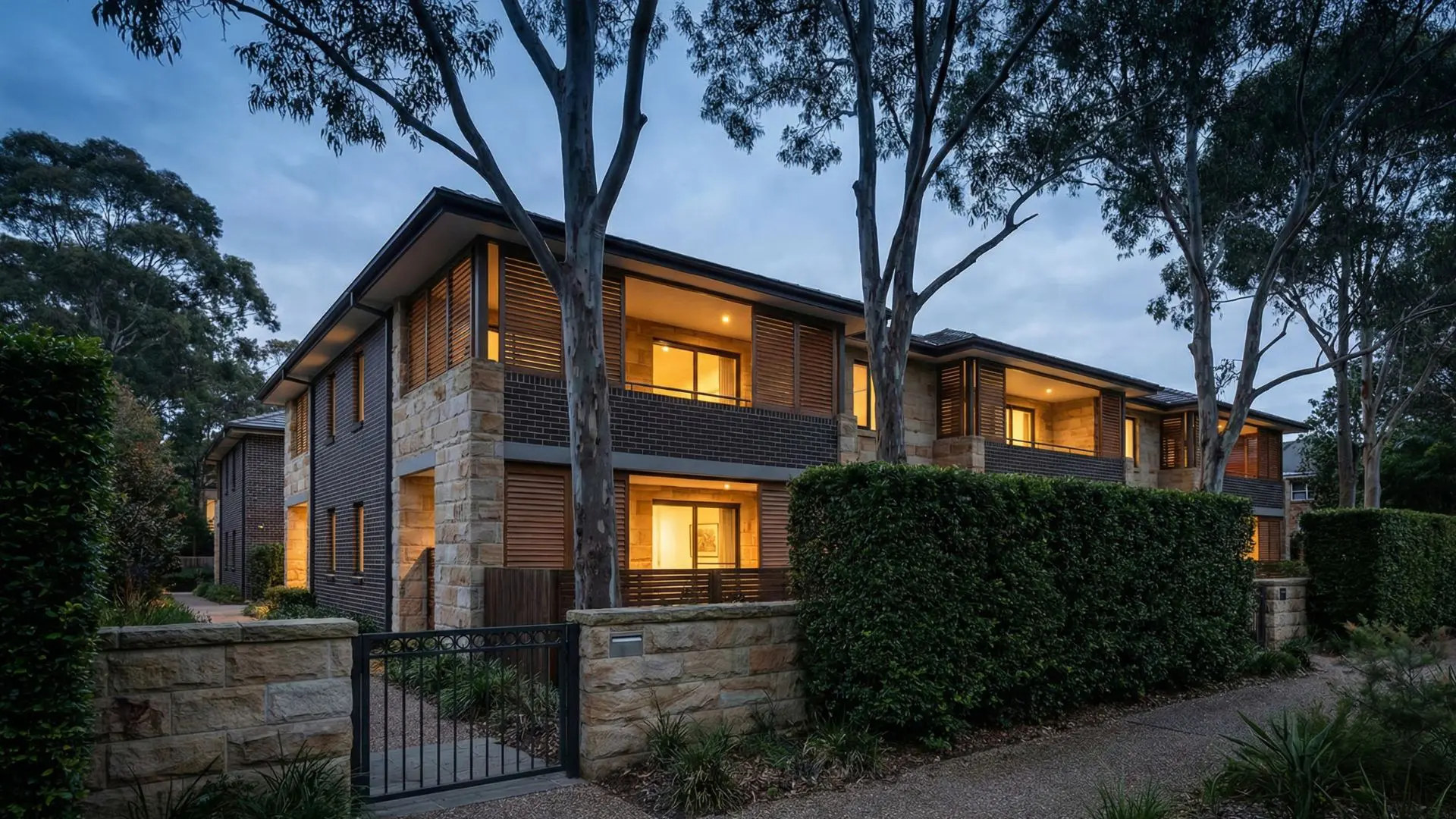
The Case for Apartments: The “Missing Middle” Opportunity
Here is the twist for 2026: In many premium suburbs, apartments are actually outperforming houses in terms of consistency and yield. Why? Because the “affordability ceiling” has forced buyers down the price ladder. When a house costs $4 million, a $1.5 million apartment starts looking like the deal of the century.
Why buy an apartment in 2026?
Because the gap between house and unit prices has become too wide to ignore. We are seeing downsizers and young professionals flocking to high-spec units, driving up competition for “lifestyle” apartments.
The Yield Machines:
Investors take note. While house yields hover around 2%, units in connectivity hubs are delivering serious returns. Hornsby units are generating a massive 4.7% rental yield, and St Leonards is close behind at 4.2%. These suburbs are insulated by transport infrastructure and high tenant demand.
The Capital Growth Surprise:
Don’t assume units don’t grow in value. Collaroy units jumped 4.5% last quarter, and Dee Why rose by the same amount (4.5%). These beachside suburbs offer a lifestyle that is simply unattainable in the detached market for most buyers.
The “Bedroom Tax”:
Be warned—not all apartments are equal. In Manly, the jump from a 2-bedroom unit (1.79m)toa3−bedroomunit(3.13m) is over $1.3 million. This massive premium for that third bedroom highlights the desperate shortage of family-sized apartments. If you can find a 3-bedder in a suburb like Warriewood or Mona Vale, you are holding a rare commodity.
The Verdict:
Buy an apartment if you want lifestyle on a budget or high cash flow. Target suburbs with “village” vibes (like Kirribilli or Freshwater) or transport hubs (like St Leonards), but try to secure a 3-bedroom unit if your budget allows—it’s the asset class with the biggest supply shortage.

The 2026 Hotlist: Where to Buy?
Based on the latest data, here are our top picks for both categories.
Top 3 Picks for HOUSES
1. North Narrabeen: The “sweet spot” for value. High growth (+6.1%) but still accessible compared to its southern neighbours. Ensure you avoid any flood zones.
2. Mosman (The Contrarian Play): Prices here have been corrected by -8.6% recently. For savvy buyers with finance ready, this is a rare window to buy blue-chip stock at a discount.
3. Turramurra: A “School Belt” fortress. While other Upper North Shore suburbs cooled, Turramurra held its value (+2.6%) thanks to its large blocks and train access.
Top 3 Picks for APARTMENTS
1. Collaroy: Beachside living on the B-Line. Strong growth (+4.5%) and a median of $1.16m make it a brilliant alternative to Manly.
2. Hornsby: The investor’s dream. Unbeatable yields (4.7%) and low entry price ($710k) offer safety and cash flow.
3. Milsons Point: The city-fringe luxury play. Prices grew 4.2% as corporate tenants and professionals returned to the office.
Final Thoughts
In 2026, the question isn’t just “house or apartment?”—it’s about matching your asset to your lifestyle and financial reality.
If you are buying a house, you are playing a long game of scarcity. If you are buying an apartment, you are playing a strategic game of lifestyle and yield. Whichever path you choose, the data suggests that Sydney’s North remains one of the most resilient markets in the country—provided you buy in the right postcode.